


 021-51111890
 购物车()
购物车()
 sales@molnova.cn







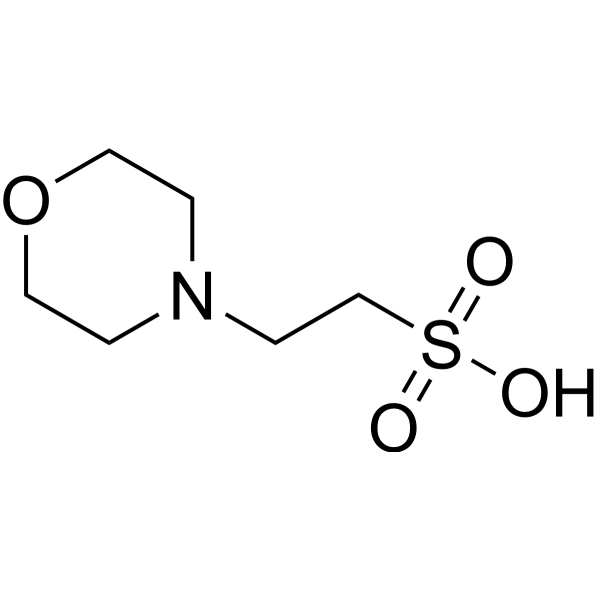
MES
CAS No. 4432-31-9
MES ( 2-Morpholinoethanesulphonic acid | 4-Morpholineethanesulfonic acid )
产品货号. M28311 CAS No. 4432-31-9
MES(2-吗啉乙磺酸)是一种两性离子缓冲剂,在 5.5-7.7 的 pH 范围内有效。 MES作为Good's缓冲液之一,广泛用于调节植物培养基、试剂溶液和生理实验的pH值。
纯度: >98% (HPLC)
 COA
Datasheet
HNMR
HPLC
MSDS
Handing Instructions
COA
Datasheet
HNMR
HPLC
MSDS
Handing Instructions
| 规格 | 价格/人民币 | 库存 | 数量 |
| 50MG | ¥135 | 有现货 |


|
| 100MG | ¥173 | 有现货 |
|
| 500MG | ¥374 | 有现货 |
|
| 1G | ¥537 | 有现货 |
|
生物学信息
-
产品名称MES
-
注意事项本公司产品仅用于科研实验,不得用于人体或动物的临床与诊断
-
产品简述MES(2-吗啉乙磺酸)是一种两性离子缓冲剂,在 5.5-7.7 的 pH 范围内有效。 MES作为Good's缓冲液之一,广泛用于调节植物培养基、试剂溶液和生理实验的pH值。
-
产品描述MES (2-Morpholinoethanesulphonic acid), a zwitterionic buffer, is effective in the pH range of 5.5-7.7. MES, as one of the Good’s buffers, is broadly used to regulate pH value for plants culture medium, reagent solution, and physiological experiments.
-
体外实验——
-
体内实验——
-
同义词2-Morpholinoethanesulphonic acid | 4-Morpholineethanesulfonic acid
-
通路Others
-
靶点Other Targets
-
受体LPA2
-
研究领域——
-
适应症——
化学信息
-
CAS Number4432-31-9
-
分子量195.23
-
分子式C6H13NO4S
-
纯度>98% (HPLC)
-
溶解度In Vitro:?H2O : 125 mg/mL (640.24 mM)
-
SMILESOS(=O)(=O)CCN1CCOCC1
-
化学全称——
运输与储存
-
储存条件(-20℃)
-
运输条件With Ice Pack
-
稳定性≥ 2 years
参考文献
1.Kuo B, et al. The LPA2 receptor agonist Radioprotectin-1 spares Lgr5-positive intestinal stem cells from radiation injury in murine enteroids. Cell Signal. 2018 Nov;51:23-33.
产品手册



关联产品
-
Linderene acetate
Lindereneacetate 是脯氨酰内肽酶的竞争性抑制剂。
-
β-Endorphin (18-31) ...
β-Endorphin (18-31) (human)
-
Antalarmin hydrochlo...
CRF1拮抗剂。


