


 021-51111890
 购物车()
购物车()
 sales@molnova.cn







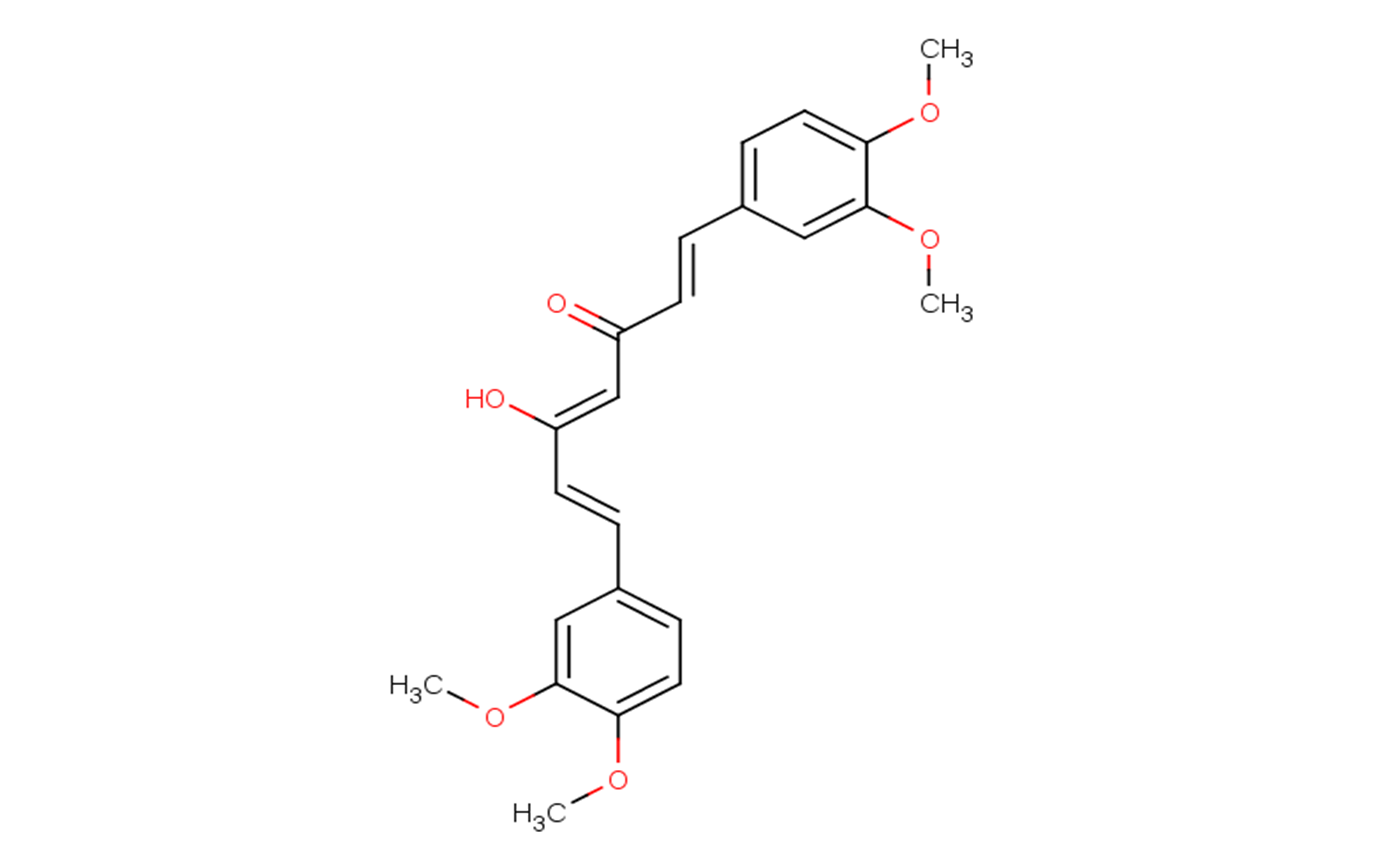
Dimethylcurcumin
CAS No. 52328-98-0
Dimethylcurcumin ( ASC-J9,GO-Y025 )
产品货号. M22795 CAS No. 52328-98-0
二甲基姜黄素 (ASC-J9) 是一种雄激素受体降解增强剂。它能有效抑制去势抵抗性前列腺癌细胞的增殖和侵袭。二甲基姜黄素能够在多种人前列腺癌细胞中以剂量依赖性方式降解fAR和AR3。二甲基姜黄素还可以有效抑制 CWR22Rv1-fARKD 细胞中 AR 靶向基因。
纯度: >98% (HPLC)
 COA
Datasheet
HNMR
HPLC
MSDS
Handing Instructions
COA
Datasheet
HNMR
HPLC
MSDS
Handing Instructions
| 规格 | 价格/人民币 | 库存 | 数量 |
| 5MG | ¥278 | 有现货 |


|
| 10MG | ¥432 | 有现货 |
|
| 25MG | ¥770 | 有现货 |
|
| 50MG | ¥1172 | 有现货 |
|
| 100MG | ¥1683 | 有现货 |
|
| 500MG | 获取报价 | 有现货 |
|
| 1G | 获取报价 | 有现货 |
|
| 1 mL x 10 mM in DMSO | ¥313 | 有现货 |
|
生物学信息
-
产品名称Dimethylcurcumin
-
注意事项本公司产品仅用于科研实验,不得用于人体或动物的临床与诊断
-
产品简述二甲基姜黄素 (ASC-J9) 是一种雄激素受体降解增强剂。它能有效抑制去势抵抗性前列腺癌细胞的增殖和侵袭。二甲基姜黄素能够在多种人前列腺癌细胞中以剂量依赖性方式降解fAR和AR3。二甲基姜黄素还可以有效抑制 CWR22Rv1-fARKD 细胞中 AR 靶向基因。
-
产品描述Dimethylcurcumin (ASC-J9) is an androgen receptor degradation enhancer. It effectively suppresses castration-resistant prostate cancer cell proliferation and invasion.Dimethylcurcumin is able to degrade fAR and AR3 in a dose-dependent manner in various human PCa cells. Dimethylcurcumin can also effectively suppress AR-targeted genes in CWR22Rv1-fARKD cells. Dimethylcurcumin (5 or 10 μM) significantly suppresses the DHT-induced cell growth in all three PCa cell lines. Dimethylcurcumin suppresses AR-targeted genes and cell growth by the degradation of fAR and ectopic AR3 in C81 and C4-2 cells. ASC-J9 reduces the AR aggregated AR-112Q in cells. Dimethylcurcumin suppresses the aggregation of AR-112Q in SBMA PC12/AR-112Q cells.Dimethylcurcumin (75 mg/kg, i.p.) degrades both fAR and AR3 in the xenografted tumors in vivo and ASC-J9-treated tumors have significantly decreased Ki67-positive cells. Dimethylcurcumin (50 mg/kg every 48 h, i.p.) substantially ameliorates the SBMA symptoms in AR-97Q mice and ameliorates neuromuscular pathological findings. ASC-J9-treated mice show significantly smaller prostate tumor sizes when compared with those receiving classic ADT/castration with little serum androgen.(In Vitro):Dimethylcurcumin (ASC-J9) is able to degrade fAR and AR3 in a dose-dependent manner in various human PCa cells. Dimethylcurcumin (ASC-J9) can also effectively suppress AR-targeted genes in CWR22Rv1-fARKD cells. Dimethylcurcumin (ASC-J9) (5 or 10 μM) significantly suppresses the DHT-induced cell growth in all three PCa cell lines. Dimethylcurcumin (ASC-J9) suppresses AR-targeted genes and cell growth by degradation of fAR and ectopic AR3 in C81 and C4-2 cells. Dimethylcurcumin (ASC-J9) selectively promotes AR degradation by disrupting the interaction between AR and AR coregulators. ASC-J9 reduces the AR aggregated AR-112Q in cells. Dimethylcurcumin (ASC-J9) suppresses the aggregation of AR-112Q in SBMA PC12/AR-112Q cells. (In Vivo):Dimethylcurcumin (ASC-J9) (75 mg/kg, i.p.) degrades both fAR and AR3 in the xenografted tumors in vivo, and SC-J9-treated tumors has significantly decreased Ki67-positive cells. Dimethylcurcumin (ASC-J9) (50 mg/kg every 48 h, i.p.) substantially ameliorates the SBMA symptoms in AR-97Q mice, and ameliorates neuromuscular pathological findings. The Dimethylcurcumin (ASC-J9)-treated SBMA mice have relatively normal serum testosterone concentrations. ASC-J9-treated mice show significantly smaller prostate tumor sizes when compared with those receiving classic ADT/castration with little serum androgen.
-
体外实验Dimethylcurcumin (ASC-J9) is able to degrade fAR and AR3 in a dose-dependent manner in various human PCa cells. Dimethylcurcumin (ASC-J9) can also effectively suppress AR-targeted genes in CWR22Rv1-fARKD cells. Dimethylcurcumin (ASC-J9) (5 or 10 μM) significantly suppresses the DHT-induced cell growth in all three PCa cell lines. Dimethylcurcumin (ASC-J9) suppresses AR-targeted genes and cell growth by degradation of fAR and ectopic AR3 in C81 and C4-2 cells. Dimethylcurcumin (ASC-J9) selectively promotes AR degradation by disrupting the interaction between AR and AR coregulators. ASC-J9 reduces the AR aggregated AR-112Q in cells. Dimethylcurcumin (ASC-J9) suppresses the aggregation of AR-112Q in SBMA PC12/AR-112Q cells.
-
体内实验Dimethylcurcumin (ASC-J9) (75 mg/kg, i.p.) degrades both fAR and AR3 in the xenografted tumors in vivo, and SC-J9-treated tumors has significantly decreased Ki67-positive cells. Dimethylcurcumin (ASC-J9) (50 mg/kg every 48 h, i.p.) substantially ameliorates the SBMA symptoms in AR-97Q mice, and ameliorates neuromuscular pathological findings. The Dimethylcurcumin (ASC-J9)-treated SBMA mice have relatively normal serum testosterone concentrations. ASC-J9-treated mice show significantly smaller prostate tumor sizes when compared with those receiving classic ADT/castration with little serum androgen.
-
同义词ASC-J9,GO-Y025
-
通路Endocrinology/Hormones
-
靶点Androgen Receptor (AR)
-
受体Androgen Receptor
-
研究领域Others
-
适应症Acne vulgaris
化学信息
-
CAS Number52328-98-0
-
分子量396.43
-
分子式C23H24O6
-
纯度>98% (HPLC)
-
溶解度DMSO:48 mg/mL (121.08 mM);Water:Insoluble
-
SMILESO=C(/C=C(O)/C=C/C1=CC=C(OC)C(OC)=C1)/C=C/C2=CC=C(OC)C(OC)=C2
-
化学全称——
运输与储存
-
储存条件(-20℃)
-
运输条件With Ice Pack
-
稳定性≥ 2 years
参考文献
1. Yamashita S, et al. ASC-J9 suppresses castration-resistant prostate cancer growth through degradation of full-length and splice variant androgen receptors. Neoplasia. 2012 Jan;14(1):74-83.
产品手册


关联产品
-
Andarine
Andarine (S-4;GTx007) 是一种非类固醇选择性雄激素受体调节剂 (SARM),Ki 为 4 nM。
-
Dehydroepiandrostero...
醋酸脱氢表雄酮是肾上腺皮质产生的主要 C19 类固醇。
-
Enzalutamide
一种雄激素受体 (AR) 拮抗剂,IC50 为 36 nM。


